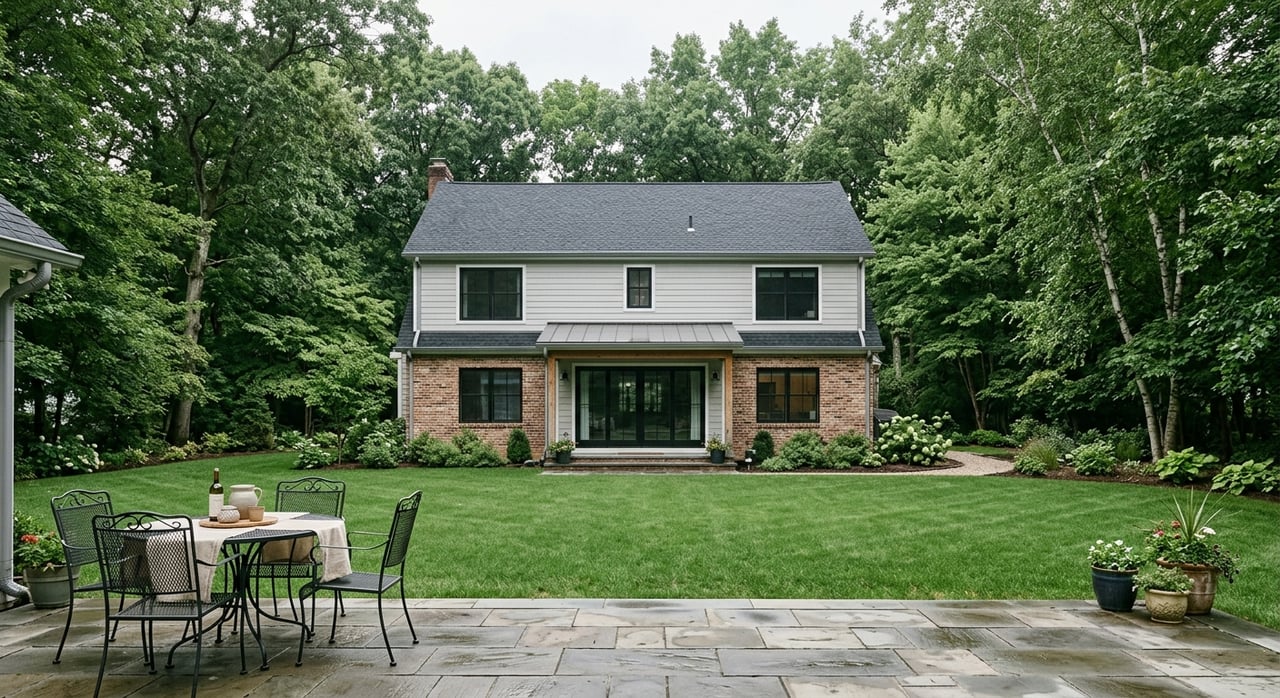
Staying In Glenview: A Move‑Up Buyer’s Guide
June 18, 2026
June 18, 2026
Wondering if you can get the extra space you need without giving up the Glenview routines you already love? If you have outgrown your current home, you are not alone. Many owners in Glenview reach a point where a bigger kitchen, another bedroom, a home office, or more yard space matters more than starting over in a new town. The good news is that Glenview gives you real move-up options, and this guide will help you think through budget, location, timing, and local due diligence before you make your next move. Let’s dive in.
Glenview has the profile of a place where people put down roots. Census estimates show 47,711 residents, 18,448 households, and a 78.9% owner-occupied rate. That owner-heavy makeup often supports the kind of long-term planning that leads to move-up buying instead of moving away.
For many households, convenience is a big part of the equation. The village highlights access to expressways, commuter trains, 34 parks and playgrounds across more than 290 acres, and public schools located within village limits. If your work, routines, and community ties are already here, staying in town can feel far easier than resetting everything somewhere else.
Commute options also support the stay-in-town decision. Glenview has two Metra stations on the Milwaukee North line serving Downtown Glenview and The Glen of North Glenview, with average commute times of about 30 to 35 minutes according to the village. For dual-income households, that can be a meaningful reason to move up locally rather than push farther out.
Glenview’s housing mix helps explain why many local buyers choose to move up within the village. CMAP data show that 60.3% of the housing stock is single-family detached, while 13.4% is attached single-family. That means many buyers looking for “more house” are often moving from an attached home or a smaller detached home into a larger detached property.
The housing stock is also relatively spacious. About 35.0% of homes have 3 bedrooms, 24.6% have 4 bedrooms, and 10.9% have 5 or more bedrooms. If you need more functional square footage for a growing household, guests, work-from-home needs, or storage, Glenview already has a large pool of homes that may fit that next chapter.
Age and style also shape the move-up path. The median year built is 1977, with a sizable share of homes built from 1940 to 1969 and another strong share built in 2000 or later. In practical terms, your search may come down to choosing between older in-town character, updated traditional homes, or newer redevelopment options.
Not every Glenview move-up search looks the same. Your best fit may depend on whether you want newer construction, a different lot layout, easier commuting, or simply more interior space while staying close to your current routines. Glenview has several distinct areas that can help frame that search.
The Glen is Glenview’s newest major neighborhood area, created after the closure of Naval Air Station Glenview in 1995. If your move-up goals include newer homes, more contemporary layouts, or a more planned-development feel, this area may be worth a closer look.
Realtor.com’s neighborhood snapshot listed The Glen with a median listing price of $752,500 in March 2026. That figure gives you a useful starting point, but the right budget still depends on property type, size, and condition. In a move-up search, The Glen often represents a different value equation than older housing areas in town.
Downtown Glenview is described by the village as the historic commercial center. If you like established streets, older housing stock, and close-in convenience, this part of town may appeal to you.
For some buyers, moving up here means finding a larger older home, a renovated property, or a better lot while keeping an in-town feel. This can be a smart path if you want more room without giving up the familiarity of a mature neighborhood setting.
Realtor.com also identifies areas such as The Willows and Indian Ridge as distinct Glenview neighborhoods. That matters because “move-up in Glenview” is not one single budget or home style. Even within the same village, your options can shift based on neighborhood pattern, housing age, and typical home size.
If your priority is a larger yard, a detached home, or a newer layout, it helps to compare submarkets instead of searching Glenview as one broad category. A neighborhood-by-neighborhood strategy can save you time and sharpen your expectations.
One of the biggest questions move-up buyers ask is how much more they should expect to spend. In Glenview, the gap between attached and detached homes is significant enough that it should shape your planning early.
MRED’s April 2026 local market update shows a trailing-12-month median sales price of about $420,000 for attached single-family homes and about $885,000 for detached single-family homes in Glenview. For many households, that creates the clearest picture of the classic move-up jump in town.
That does not mean every detached home costs close to $885,000 or every attached home trades around $420,000. It does mean you should be ready for a meaningful change in budget if you are moving from an attached property into a detached one. Price can vary widely based on condition, updates, lot size, and location within Glenview.
Broader market snapshots reinforce that range. Realtor.com reported an April 2026 median listing price of $664,950, a median sold price of $725,000, and 165 active listings. Redfin’s March 2026 median sale price was $768,000. Together, those figures suggest that while asking prices may cluster in the mid-$600,000s in some views, many sold prices land higher once you narrow to specific home types and neighborhoods.
ZIP-level data add another layer. Realtor.com’s March 2026 snapshot showed a median listing price of $599,000 in 60025 and $799,000 in 60026. If you are comparing areas, this is a good reminder that staying in Glenview does not mean one fixed price point.
Timing matters when you are trying to sell one home and buy the next. Realtor.com’s latest snapshot shows Glenview homes selling in a median of 28 days, with a sale-to-list ratio of 100%. That points to a market where well-positioned homes can move efficiently.
MRED’s trailing-12-month figures show average market times of about 32 days for detached homes and 34 days for attached homes. Those numbers are close enough to suggest that both sides of your move may need a clear plan, especially if you are trying to avoid overlapping costs or a rushed purchase.
For sellers, this is where preparation can make a difference. A thoughtful pricing and presentation strategy can help you enter the market with fewer surprises. For buyers, it means having your budget, must-haves, and timing options lined up before the right house appears.
In a market like Glenview, move-up buyers usually need a sequencing plan as much as they need a home search. The right structure depends on your comfort with risk, your available equity, and how much flexibility you have on move dates.
Selling first can give you the clearest budget for your next purchase. You know your proceeds, your likely down payment, and your monthly target before you shop seriously.
This option can reduce financial stress, but it may require temporary housing or a negotiated closing timeline if you do not find the next home quickly. It often works best when certainty matters more than convenience.
Buying first may help you avoid a double move and give you time to transition on your own schedule. This can be appealing if inventory is tight or if your next home has very specific requirements.
The tradeoff is that you may carry more overlap risk. Before using this approach, you need a realistic understanding of what your current home can likely command in today’s market.
Many move-up buyers aim for a coordinated sale and purchase with aligned closing dates. In a market where homes are moving in about a month, this can be possible with careful planning, strong negotiation, and a clear backup plan.
This route can minimize disruption, but it usually takes disciplined preparation on both sides. The smoother your listing launch and home search are, the easier it is to keep the pieces moving together.
A bigger home is exciting, but local due diligence matters just as much as layout and finishes. In Glenview, a few area-specific checks deserve your attention before you commit.
Cook County follows a triennial reassessment cycle. The assessor notes that north suburban properties are generally reassessed only in special circumstances such as division work or permit-related changes outside the normal cycle.
For move-up buyers, the key takeaway is simple: build property taxes into your real budget, not just your wish list. You should also keep the county treasurer’s fixed tax calendar in mind when planning closing costs and ownership timing.
The village says some Glenview properties may be affected by river overflow, sanitary sewer backup, and local drainage issues. That means flood history is not a box to check at the last minute.
Before writing an offer, ask about flood history, drainage concerns, and FEMA status for the specific property. This is especially important when you are stretching your budget for a larger home and want fewer surprises after closing.
If school attendance is part of your planning, do not assume every Glenview address feeds the same schools. District 34 serves preschool through 8th grade, and District 225 serves Glenview and Northbrook students at Glenbrook North and Glenbrook South.
District 225 notes that Glenview properties north of Willow Road annexed on or after August 5, 2008 attend Glenbrook North. Because boundaries can depend on the exact property, address-specific verification is the safest step before making a decision.
The families who navigate a move-up well are usually the ones who start planning before they feel urgent pressure. That means understanding your current home’s likely market position, your target purchase range, your ideal neighborhood tradeoffs, and your timing options before the search gets emotional.
In Glenview, the numbers support a strong stay-in-town story. You have a village with a high ownership rate, substantial single-family housing stock, established neighborhoods, newer development options, commuter access, and price bands that can support several kinds of move-up paths. If you approach the process with a clear plan, you can often gain the extra space you need without leaving the community you already know.
If you are thinking about your next chapter in Glenview, working with a team that understands pricing, presentation, and timing on both sides of the transaction can make the move feel far more manageable. For guidance tailored to your current home and your next-step goals, reach out to Deb Baker.
Get assistance in determining current property value, crafting a competitive offer, writing and negotiating a contract, and much more. Contact me today.